

As a beauty editor with a decade of beauty experience and a perfume lover, it's impossible to ignore the rise and rise of fragrance in recent years. In fact, a report by Euromonitor predicts that fragrance will drive 23% of the beauty industry’s overall growth between 2024 and 2029. In short, we're all buying a lot of perfume right now.
And I'm not surprised. You only have to take a scroll on perfume-tok to become engrossed in ever-changing fragrance trends and niche perfume aesthetics (want to smell like a Y2K office siren in New York? Or perhaps a character from your favourite TV show? You can bet there's a fragrance for it). Every day, there is a new mood, and every week, a new fragrance brand is launching.
But if you zoom out from the small microtrends, there's a bigger picture at play. It's not just the types of fragrances we're choosing (such as gourmand perfumes or clean-smelling perfumes), but the behaviours shaping why we're buying them. Fragrance has long been an extension of our identity—much like the clothes we wear or how we do our hair—and the perfumes we spritz can tell us a lot about ourselves, as well as wider societal shifts. After all, fragrance, with all its emotional connotations, can be truly transformative to wear, and I would bet that most people call upon their fragrances to channel a specific mood or boost their confidence.
Ahead, we're charting the biggest fragrance archetypes for 2026, as predicted by fragrance and industry experts. Scroll on to find your perfume personality and the corresponding scents you'll want to discover next.
Find Your Fragrance Archetype
The Minimalist

It's impossible to ignore the demand for "quiet" fragrances that skyrocketed in the wake of the overarching quiet-luxury aesthetic of the past couple of years, and many still want a fragrance that whispers, not shouts. "I think the want for 'strong, beast-mode' fragrances will start to curb," predicts Aamna Lone, a chemistry-trained fragrance expert. "Trends are like a pendulum, and I feel consumers are beginning to bore of these insanely strong fragrance types," she says.
It explains why so many are drawn to fragrances such as Escentric Molecules Molecule 01, Merit Retrospect and Glossier You. These skin scents sit closely on the skin, noticeable to the wearer without overwhelming others nearby. They're incredibly versatile, being able to be worn in intimate spaces such as offices and enclosed without disturbing others (making them a great perfume for migraine sufferers, too). Often, you'll also find them in rollerball or chic solid-perfume format, making them a quieter way to wear and reapply fragrance throughout the day. They are the fragrance equivalent of The Row, Khaite and Toteme.
Alongside this trend, Lone anticipates the rise in "fragrance captives", patented aroma chemicals or fragrance blends that fragrance manufacturers create exclusively for their own use. "I forecast that fragrances with high-quality ingredients and specific captives from fragrance houses will rise. Online, these captives actually draw users in as they tend to be unique in their smell too, allowing exclusivity to the customer and therefore their scent," says Lone. In true minimalist fashion, this archetype is discerning and selective with the fragrances they choose to invest in.
Shop the Scents:


The Storyteller
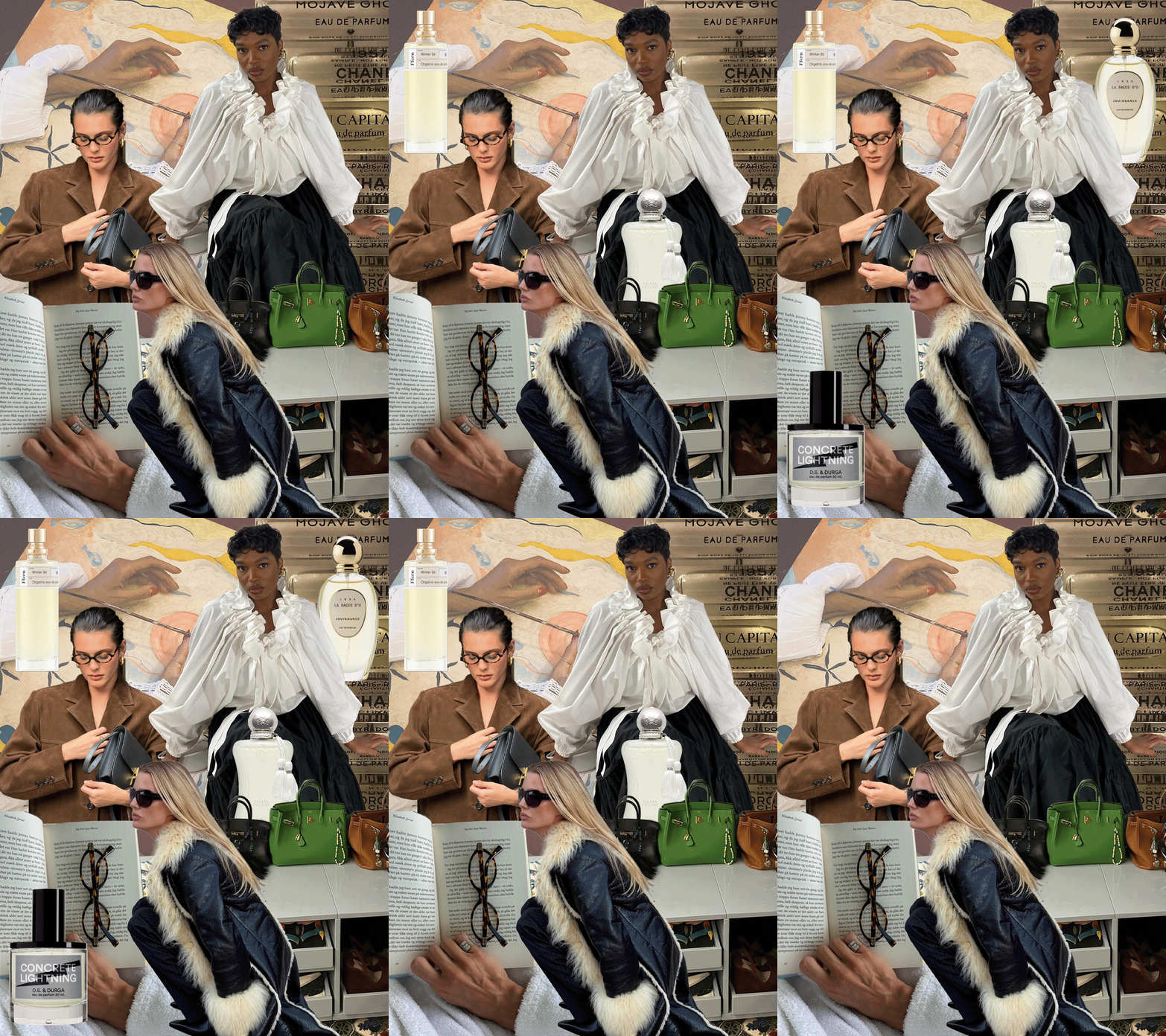
As the appetite for niche perfumes only continues to increase, the storytellers amongst us yearn for fragrances with a story to tell. Whether they're inspired by narrative-led marketing or harness unexpected fragrance notes, this set of fragrance wearers desires niche fragrances from less well-known brands as a form of self-expression. In fact, Market Reports World predicts niche perfumes will grow 8.54% from 2025 to 2034.
"I am often asked for my smokiest, dirtiest, weirdest fragrance; the more off the wall, the better," says Sarah Reason, owner of independent fragrance and lifestyle store Soliflore. "My customers are drawn to Soliflore because they no longer want heavy-hitters from the fashion houses. The smaller the fragrance house, the better, too. The move towards tiny artisan producers whose heart, soul and artistry are evident in the bottle is really exciting," she says.
Going hand-in-hand with niche fragrance shopping is discovering the independent fragrance boutiques that champion them, offering a more personalised experience beyond the traditional beauty hall counter. "Tiny boutiques are not only where you'll find the most interesting, hard-to-find fragrances, but where the service is extremely personal," says Reason.
"Those of us who have these boutiques have worked exceptionally hard to curate and create really immersive spaces for customers; I see a real hankering for it and the fun, human connection that it brings," she says. "I have very loyal customers, and I have many who have upwards of 20 fragrances from me in their collections. Old-fashioned service will be where it's at, guided by someone who knows your name, knows what you bought last time and can therefore help you fill in the gaps in your fragrance wardrobe."
Shop the Scents:


The Classicist
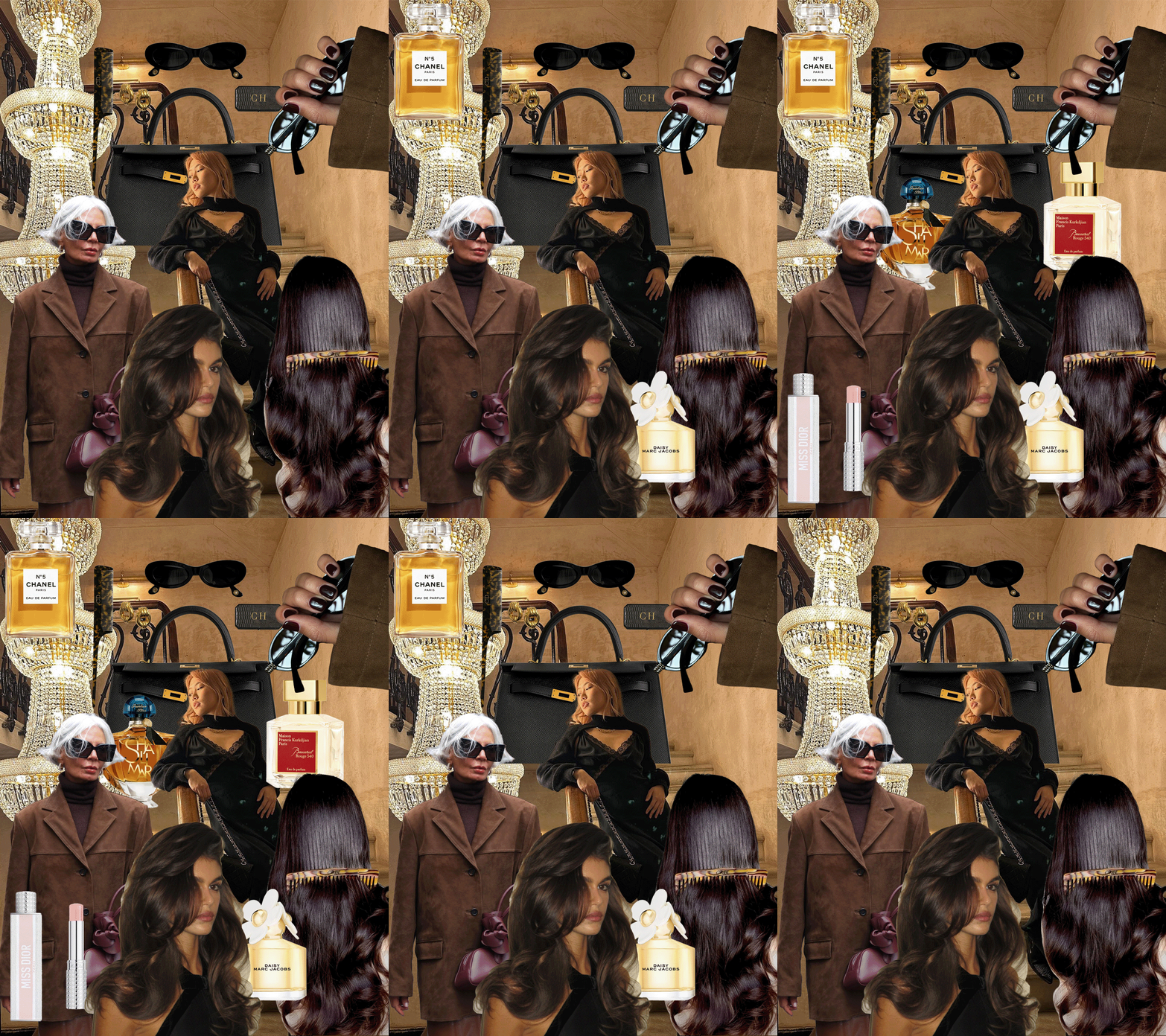
With more fragrances to choose from than ever before, it's perhaps even more impressive that many still own and wear their one signature scent, remaining loyal to a perfume that they have worn for years. There's a reason why Chanel N°5 remains one of the best-selling perfumes in the world. And alongside other heritage classics like Dior's Miss Dior and modern icons like Maison Francis Kurkdjian Baccarat Rouge 540, it's no surprise that these fragrances have a longevity that transcends decades and generations. They're universally appealing and totally timeless. And the formulas are high-quality, and you know you're investing in a dependable, long-lasting perfume.
"Whilst I am always up for trying the latest fragrance launches, my mum is the kind of person who remains loyal to a scent for her entire life," says Grace Lindsay, Who What Wear UK's junior beauty editor. "Looking back, I recall watching her spritz Chanel’s N°5 in the bathroom mirror, and it remains her favourite fragrance to this day," she says. Lindsay points out that remaining loyal to trusted favourites came through as a wider trend last year.
"John Lewis reported Chanel N°5, Maison Francis Kurkdjian Baccarat Rouge 540 and Chanel Coco Mademoiselle as some of its best-selling scents in 2025, and I can totally see why," she says. "These fragrances aren’t new, but they all hold a timeless appeal, most likely down to their chic, expensive-smelling aromas that never fail to earn compliments. Some might think it’s boring to stay loyal to the same scent time and time again, but I think it takes a certain boldness to know what you like and stick with it, especially in the ever-changing beauty landscape."
There's also an element of nostalgia at play as we rediscover the heritage fragrances worn by our mothers or other important women in our lives, which is often one of our first introductions to fragrance. And fashion houses are responding with reinventions of their most classic fragrances, such as Chanel No°5 L'Eau, a fresher and lighter take on the original No°5, and Miss Dior's playful fragrance sticks that invite a younger generation to discover the timeless floral perfume.
Shop the Scents:


The Individualist

The individualists take the essence of a signature scent and take it one step further. Rather than wearing just one fragrance, they're playing alchemist; layering perfumes, fragranced body sprays and scented body lotions to take matters into their own hands and craft their own signature. It's been rooted in Middle-Eastern culture for centuries, but the trend has been driven further by Gen Z, with Unilever research showing that 29% of the younger generation layer their fragrances to create their own bespoke scent.
"People still have a 'signature scent', but the image of what a signature scent looks like has changed," says Lone. "It is rarely just one fragrance now, as layering has become exponentially popular, with even brands such as Maison Crivelli encouraging layering. This is a trend that will grow greater in 2026, especially with fragrance becoming even more popular," she says.
It's a trend that fragrance specialist Eudora Nwasike has also noted. "People absolutely want signature scents, but not in one bottle. Layering lets people create something that feels personally their own. It’s a scent they’ve designed rather than one they’ve simply bought," she says. "That’s why we’re seeing so many brands release layering-friendly collections, from body oils, body creams and single-note perfume oils to body mists that blend easily. The industry is clearly responding to how people actually want to wear fragrance now."
Nwasike also points to social media for the acceleration of this trend. "Another reason layering is taking off is simple curiosity," she says. "Fragrance content online has made people more experimental, and they want to try combinations they haven’t seen before. Layering is an easy, creative form of self-expression. You can shift your scent depending on your mood, your outfit or the season," she adds. "It turns fragrance from a static product into a personal ritual, and I think that’s why it will continue to grow in 2026."
Shop the Scents:


The Maximalist

Enter the maximalists. Their fragrance is loud, proud, long-lasting and undoubtedly one of their most complimented perfumes. It's impossible to ignore the increase in perfume extraits that have passed the Who What Wear UK beauty desk, all of which come with lasting power and the promise that they'll walk into the room before you do.
"I spend my days speaking with retailers and 'noses', and all of us in the fragrance industry are currently asking each other the same question: How far is too far when it comes to our current obsession with punchy perfumes? I have considered my answer to this question carefully over the past 12 months, and my answer is that, really, the limit does not exist. Fragrance maximalism is my entire personality," says Who What Wear UK beauty director Shannon Lawlor.
"As perfume prices rise to levels previously unthinkable, of course, I want my scent to pack a punch. I'm fed up with perfumes landing on my desk with £300+ price tags that simply waft around the surface of the skin and have zero staying power. My beauty resolution for the year is to only give fragrances attention if they're really worth my time—and you better believe I'm taking this approach with my recommendations, too."
Having spoken with perfumers and general managers for fragrance brands in recent months, they all tell me how the desire for potent fragrance is increasing. An example is the rise of oud, which is becoming more popular outside of its Middle-Eastern origins and becoming more sought after in the UK and beyond. Consumers want value and longevity from their scent, and there’s also a narrative of wanting your scent to be complimented by others. Because who doesn't love that?
Shop the Scents:


