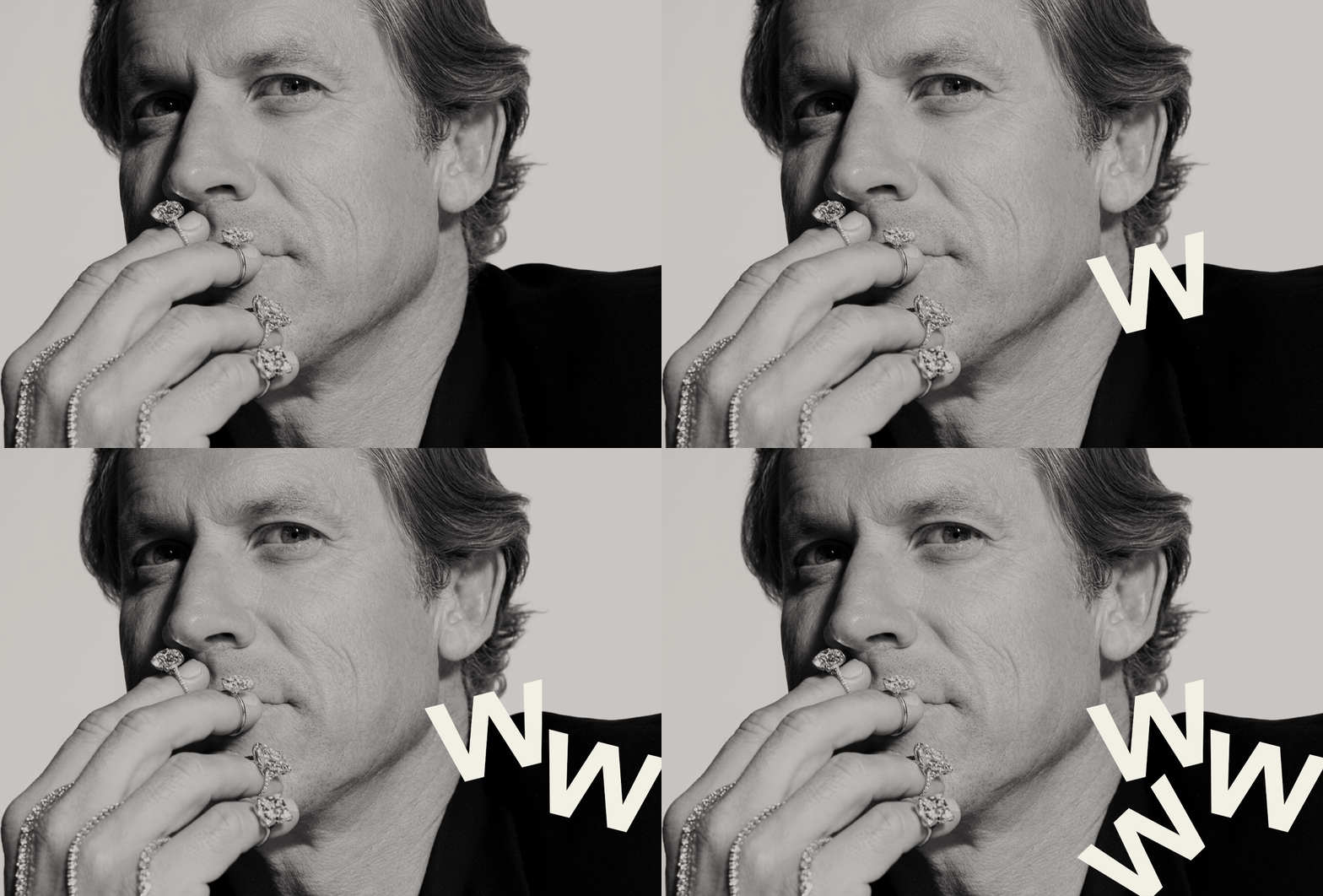
Welcome to The Who What Wear Podcast. Think of it as your direct line to the designers, stylists, beauty experts, editors, and tastemakers who are shaping the fashion-and-beauty world. Subscribe to The Who What Wear Podcast on Apple Podcasts and Spotify.
Despite being a descendant of Louis Cartier, Jean Dousset wasn't destined to go into the jewelry business. "By the time I was born, Cartier had been sold out of the family," Dousset said. "I wasn't raised crawling around the stores of Cartier or immersed in the whole epic story of Cartier." However, when an opportunity arose to interview for a job at a famed French jewelry house, Dousset knew it was meant to be. "I just happened, one day, to receive an opportunity to interview for one of the famous French jewelry houses called Chaumet Place Vendôme, the epicenter of jewelry," Dousset said.
For the latest episode of The Who What Wear Podcast, Dousset shares how he got his start in the jewelry business, why he made the switch to working with lab-grown diamonds, and more.
For excerpts from the conversation, scroll below.
You are a descendant of Louis Cartier, so your history of high jewelry obviously precedes you. I know you've never actually worked for Cartier, but I want to give listeners a quick overview of how you found yourself still in the fine jewelry business, where you worked up until you launched your own label.
By the time I was born, Cartier had been sold out of the family. I wasn't raised crawling around the stores of Cartier or immersed in the whole epic story of Cartier. I just was sort of in the background, more storytelling, and I wasn't destined from the get-go [to go] into the jewelry business. Nobody in my family is in the jewelry business in any way, shape, or form.
I just happened, one day, to receive an opportunity to interview for one of the famous French jewelry houses called Chaumet Place Vendôme, the epicenter of jewelry. Then I walked in the space, and I was immediately taken by the grandeur of the place, its historical dimension, the displays, the gemstones. That was the start of my career.
You did make this pivotal shift a few years ago to fully transitioning into lab-grown diamonds. Can you give our listeners a quick rundown about why you decided to make that transition?
I consider myself a traditionalist. I've been in this industry, like I said, 30 years, and until lab-grown diamonds came to my attention, all that was available were natural diamonds. I worked with them for the longest time, but I always thought that diamond prices were very high. It forced people to constantly compromise what is supposed to be a really enjoyable moment and purchase in one's life. It had a lot of tension to it.
We were talking about trade-offs instead of spending time talking about what people really want. We were constantly telling people what they could have instead of what they really wanted to have. The first time I saw lab-grown diamonds, it was really a tech product invented by people in tech. The real diamond industry was not yet involved.
Fast-forward a couple years, then I started seeing lab-grown diamonds cut like the best-looking diamonds I've seen and looked for my entire life. They were also certified by the foremost authority in diamond grading, which was GIA. Now, the value proposition is so different that lab-grown diamonds, to me, became irresistible.

For listeners who aren't looking for an engagement ring but want a piece of fine jewelry—maybe it's their first big jewelry purchase or [they] want to add to their collection—what would you recommend them buying that will never go out of style? Whether it's a specific type of bracelet, earring, necklace, what are you thinking?
I like to call it women's jewelry essentials. What are these pieces that you should buy if you can? [A] tennis bracelet. Looks good that you can dress it up or down. A pair of studs should be probably the first thing that you buy, and [lab grown] also gives you an opportunity to have a decent size, beautiful quality, frames your face perfect. Pendant. Very basic. You're not taking any risks. You can wear it all the time, and then from there, you can build up. I would say jewelry essentials would be my recommendation.


This interview has been edited and condensed for clarity.