The Gen Z Status Symbol Isn't a Designer Handbag—It's a $400+ Fragrance
A peek inside the shopping habits, FOMO, and search for individuality defining this generation's scent wardrobes.

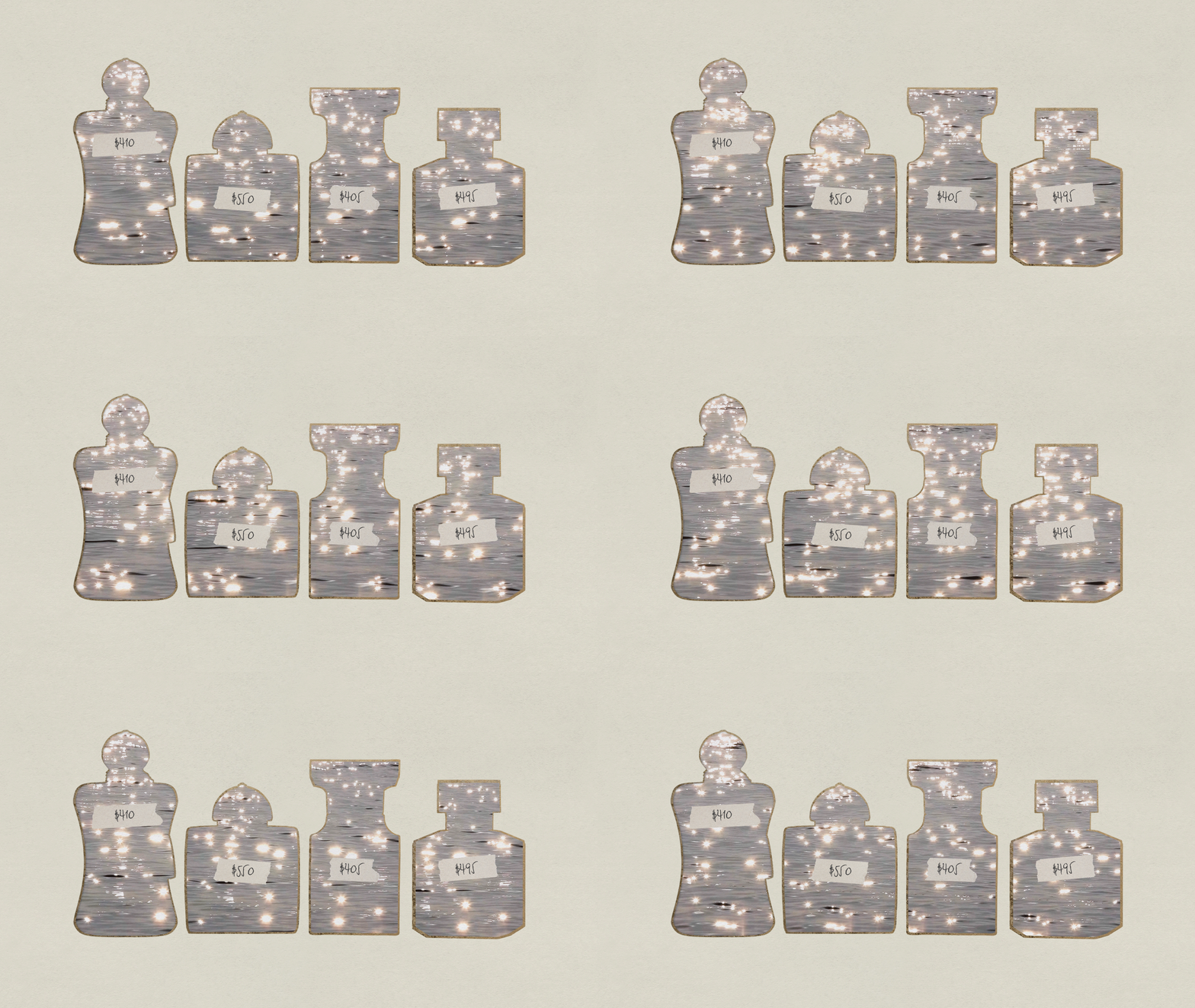
Of all the compliments you could pay a Gen Zer, "You smell so good!" is one of the most rewarding. Born largely to Gen X parents—a generation that, despite being some of the biggest spenders in the United States, did not allow much wiggle room for "fun" purchases—Gen Z has a different outlook when it comes to their finances. Blame it on the ever-twisting tornado of trends flooding their social media feeds, inspiring impulse purchases like the new hair serum an influencer swears changed their life, or the doom and gloom of an increasingly unfair economic state, which makes milestone investments like homes, cars, and even designer bags feel largely unachievable. Whichever way you slice it, Gen Z is more interested in the little luxuries than their predecessors. Enter this generation's undying affection for expensive-smelling (and oftentimes actually expensive) fragrances.

Gen Zers and millennials have long been branded with the idea that their spending habits are reckless or flippant: the $11 coffee on a bleary morning, the $22 martini with friends after a bad day of work. The argument, often posed by baby boomers and Gen Xers, is that these small investments add up and could be going toward a house—which may have been more attainable in their youth, given the smaller disparity between wages and home prices—or maybe something with resale value, like a designer bag. But today, the playing field isn't so level.
One could argue that in the midst of a hostile economic environment, these small investments are the wins Gen Z so desperately craves in a system that is not currently set up for their success. Or perhaps their priorities have shifted altogether, abandoning homeownership and investment pieces as the same pillars of accomplishment they represented to their parents as the goalposts shift farther away. Perhaps it's about the here and now rather than the uncertain future.
The Demographic
Gen Z includes anyone born between 1997 and 2012, making their age group a gaggle of 14- to 29-year-olds. This makes sense when you consider the difference in purchasing power between them and their forefathers (and mothers). While nearly 73% of Gen X owns property, according to data from Redfin, and likely has dual income to support a family, Gen Zers are in high school, college, and the early stages of their careers post-grad. A report by Clever Real Estate found that only 4.5% of Gen Zers in the U.S. are homeowners, yet many, it seems, know about Maison Francis Kurkdjian's Baccarat Rouge 540 Eau de Parfum (a $360 bottle, if bought in the 2.4-ounce size) because it sits on their dresser.
Expensive ingredients like oud and orris, once exclusive to the traditional luxury consumer—typically boomers and Gen X—are now commonplace in the democratized Gen Z fragrance landscape. "I have nieces spanning the ages of tweens to recent college grads, and their knowledge about beauty products is prolific," says Jaime Maser, a New York City publicist who has been in the beauty industry for over 25 years. "It's not something I even had a quarter of when I was their age." With growing knowledge of the luxury realm comes an appetite for the real thing, drawing younger demographics toward the sparkling shelves of Parfums de Marly, Le Labo, Tom Ford, and more. "Having a smaller luxury budget does not mean having less appreciation for luxury," says Aymar de Chergé, vice president of marketing at Parfums de Marly. "It can just mean being more selective about the products and experiences that feel worth investing in." If Gen Z can't have a million bucks, they might as well smell like it, right?

The Smellmaxxer Stratosphere
"Over the past decade, we have noticed that fragrance has gone from a special-occasion purchase into an everyday form of self-expression, with younger generations driving this shift," says Carye Campbell, senior vice president of fragrance merchandising at Sephora. "They're less focused on identifying one signature scent and more interested in building a fragrance wardrobe with scents for different moods, identities, and moments." Building a collection requires time, money, and resources, and based on Sephora's findings, buying more doesn't mean that Gen Z is skipping the luxury aisle. "This generation is less focused on staying within one price and instead prioritizes finding fragrances that resonate, with the goal of discovering something distinctive and culturally relevant," says Campbell.
This search for one's perfect fragrance(s) has sparked enough online chatter to earn a community name: FragranceTok, where fragranceheads discuss, dissect, and recommend fragrances old, new, mainstream, and niche. "Historically, fragrance was a particularly intimidating hobby to get into. Not only was it expensive, but the language surrounding perfumery was often technical and insular. Social media has democratized that knowledge," says Derek Deng, beauty editor, writer of The Tasteful Twink, and personality behind the viral "fragrance matrix" videos on TikTok. "FragranceTok has opened the floodgates to an entirely new generation of fragrance enthusiasts, many of whom might never have found their way into the hobby otherwise. Entire subcultures have been built around fragrance on TikTok. Just look at the smellmaxxers, a dedicated community of teenage boys who treat niche fragrance as a hype-driven collectible."

Smellmaxxing, a new bit of vocabulary invented by the thousands of young people speaking into their cameras about various scents, means layering fragrances in the form of body oils, scented body lotions, and additional parfum to bring out a certain note. Pinterest's 2026 trend report dubbed this practice "scent stacking" after the search terms "scent layering" and "perfume layering combinations" spiked 75% and 125%, respectively, in 2025. In a fashion world overrun by "aesthetic" and "-core" trends that aim to box Gen Zers into specific styles, this generation has become increasingly infatuated with individuality and hyperpersonalization—often opting for one-of-a-kind vintage pieces and DIY projects over something off the rack. It's no surprise that this nonconformity mindset has traveled to the fragrance-verse as well, inspiring wearers to intensify or tweak a preexisting scent to make it entirely their own. "It used to be, 'I want to smell sweet.' Now it's, 'I want to smell like rich vanilla ice cream on a sexy date night,'" says fragrance expert and content creator Paul Fino. "And I usually know what they mean."
Gen Z didn't just develop its own vernacular for describing notes; it also turned the act of draping oneself in fragrance into a ritual of artistic, individual, and even emotional expression. "Fragrance has helped me subtly parlay between masculinity and femininity in a way that feels the most pure," content creator Cyrus Veyssi previously told Who What Wear about the power of scent as a nonbinary person. "It affirms my gender without me having to prove it based on a certain look." This generation has adopted fragrance not just as part of their outfit but also as an invisible layer that helps them embody a persona—whether that is their highest selves, the "unforgettable first date," or the expensive-smelling one in the friend group. They're living in the feeling each spray inspires. "It's exciting to connect with a generation that wants to understand what makes a fragrance special rather than simply being told that it is," de Chergé adds.
Until very recently, luxury fragrance houses have kept aspirational scents within the confines of the "for him and her" binaries, but Deng believes that FragranceTok has flipped this dynamic on its head. "Young consumers aren't necessarily thinking about fragrance through that old-world, gendered lens. They're treating it as an extension of their identities and wardrobes, something that goes with their Nike Air Forces or ALO set," he says. "The teenage boys at my high school used to collect sneakers; now, they're collecting niche fragrances." And the data shows they're willing to shell out for it.
Gen Z's Slice of Luxury
As fragrance continues to boom among Gen Z, teens and young adults are spending upward of $400 a bottle to be en vogue, but it wasn't always this way. "I remember when designer perfumes were $60 to $90," says content creator and perfumery student Emma, also known as Perfumerism. "I worked in fragrance retail during the pandemic and watched the sticker prices increase constantly."
There's never been a better time to be a niche perfume brand, it seems, as Gen Zers carry on in their quest to smell unique, cool, and slightly unidentifiable—tightening the once noticeably different price tags of emerging indie brands and designer labels like corset strings. "With the boom of consumer interest in niche fragrances, companies are seeing that consumers will shell out the extra money for something that feels premium, and designer brands will raise their prices to align with this perception of luxury, niche, and prestige," says Emma. At the end of the day, fragrance is all about how a scent makes someone feel, and that is worth every penny to Gen Z.

"Fragrance is all about luxury storytelling," says Emma, a concept that is especially appealing to younger people who want to feel older (and, might I add, more capable and less like the world is falling apart around them). "Jean Paul Gaultier did not make Le Male with 15-year-olds in mind, yet social media is flooded with young boys who adore the scent and collect the entire collection of Le Male and its flankers." De Chergé adds, "One of the most fascinating things about perfumery is how unpredictable personal preferences can be and how age isn't a reliable indicator of taste. A younger consumer might love a complex, dark, woody composition, while someone who has worn fragrance for decades might fall for something more playful or versatile." In short, taste knows no age.
Playing devil's advocate, Emma points out that anyone can smell good using a $3 hand soap or drugstore body mist, so why invest in a three-digit bottle at all? "[Because] wearing a premium fragrance makes you feel high-value yourself," the perfumery student answers. A single spritz can be enough to affirm a wearer's gender or make them feel more confident, but it also makes people feel included in a larger, more prestigious conversation.
"For designer brands like Prada or Chanel, [their] fragrances have always been a more accessible touchpoint," says Emma. "The average 16-year-old might not be able to buy an $8000 Chanel bag, but they can save up for a $100 perfume." While younger shoppers may have historically written off these brands as things they could not sniff at until they were older—with a softer cushion of savings, perhaps—social media has introduced droves to designers' most budget-friendly tier. "The thing is [that brands] can continue to raise the prices of their perfumes to $200 or $300, and the fragrances still remain the most accessible items in a brand's product line," says Emma. "You want to own something from YSL? Maybe you can't afford a suit, but you will, in fact, buy a bottle of Babycat." Then you'll likely see a TikTok review of it later.
Emma chalks a lot of the success of fragrance social media content up to Gen Z's fear of missing out. "I theorize that fragrance content is so successful because it is something that viewers cannot fully connect with. You watch influencers discuss how amazing a fragrance is, you feel FOMO, and you are compelled to go smell it yourself," she explains. "I see it as no different from watching someone cook their favorite recipe or stay at a hotel that you have never heard of."
Fragrance's Next Frontier
Now that Gen Z has made its mark on the world of fragrance, experts expect the industry to evolve with its new cohort of shoppers. "Fragrances didn't used to be marketed for niche purposes. People used to have one signature scent, so fragrances were created to be versatile," says Emma. "Think Miss Dior: an iconic fragrance that can be worn on any occasion, during any season of the year. Now, with the rise of social media, companies aren't concerned with releasing the best 'signature scent,' but [rather] something shiny and new." The focus has created a shift from one or two yearly launches per brand to several experimental, trendy note-reliant SKUs.
"Beyond the traditional florals and freshies, people are diving deep into fragrances that evoke everything from petrichor to steamed rice to kitten fur," Deng agrees. "[This] is certainly emblematic of a larger shift: Fragrance is becoming less about adhering to a prescribed idea. It’s also about expressing one's individuality, indulging in curiosity, and challenging conventional ideas of what smells good." These experience-based scents—ones that inspire a sense of nostalgia, longing, or the quiet moments after an earthy rainfall—may indicate something deeper inside Gen Z's psyche. As this is the first truly digital generation living with the repercussions of overinvesting in online presence over real-world connection, it's not shocking that something designed to enhance life moments is now a conduit for evoking the feeling of new adventures, emotions, and environments rather than actually living them.


If a fragrance wardrobe with several luxury splurges is out of your budget, fear not—industry insiders sniff a not-so-faraway change. "I can hear my father saying, 'The pendulum always swings back.' We see it in fashion and beauty all the time," says Maser. "While I love to see booming parts of the beauty business, my gut (and my experience over 26 years) has shown that while fragrance is the 'hot' category at the moment, there's something new, or new again, around the corner." Emma agrees, calling signature fragrances the next frontier for perfumers. Experts can see a world in which the currently oversaturated market—stuffed with hyper-specific scents and body mists galore—becomes a bit suffocating for consumers, regardless of age. "If fragrance were to become fatiguing for the next generation, a way to win consumers would be to have pillar fragrances that are versatile and memorable," says Emma.
Whether our fragrance wardrobes will undergo a Marie Kondo–esque clean-out in the next few years or seasons to come, we know Gen Z will continue to be well-informed, ultra-curated, outrageously expensive-smelling shoppers. (Fingers crossed for houses and bags too.)
Gen Z–Coded Luxury Fragrances


