Not Mallorca or Ibiza—the Insider Guide to Spain's Rugged, Underrated Balearic Island
Where to stay, shop, dine, and beach, according to a seasoned travel editor.

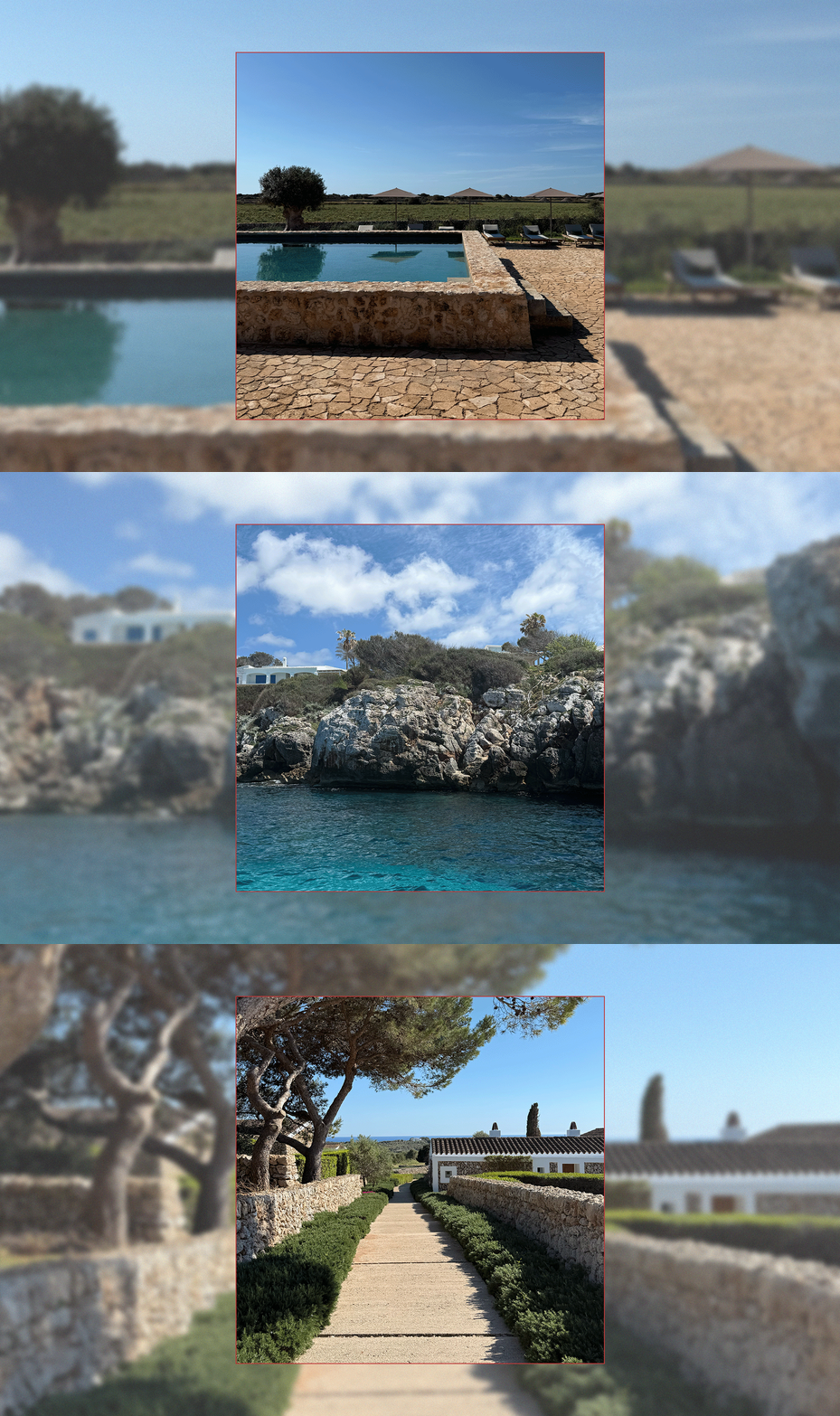
Welcome to Who What Wear Travels, a series of curated guides to destinations the fashion set loves. Consider this your download on everything from the chicest stays to the most memorable meals to the perfect travel wardrobe, all vetted by stylish locals and well-traveled fashion folks.
Shoulder-season travel to warm places that aren't quite operating at full capacity yet are among my favorite trips to take. There's a quality to it that's hard to replicate in peak summer: fewer people, more room to breathe, more affordable hotel rates, and the sense that a place is still mostly itself. Menorca in the spring fits that exactly.
Of all the Balearics, Menorca is the least built up in the best way. Even Formentera, which used to be the sleepiest of the islands, has developed more of a pulse in recent years, but Menorca has stayed quiet in a way that feels almost deliberate. There isn't a huge amount to do here in the traditional sense. Days are simple and elemental: long seafood lunches by the water, dramatic wild beaches that require real effort to reach, swimming in water that is genuinely some of the clearest in the Mediterranean thanks to the posidonia seagrass that grows along the seabed and keeps it that way. When you're not at the beach, you're roaming around Ciutadella's old town, poking around the fishing villages along the coast, shopping in Mahón, or making the trip out to Hauser & Wirth on its own private island.
I went to Menorca in late April and into early May, when the island was just starting to shake itself awake for the season, and I'm officially convinced that it was the perfect time to visit. Almost everything had just reopened for the season, the temperatures were divine, and I had the beaches largely to myself. By summer, the island fills up. Parking gets tricky, the best beaches require early starts, restaurants require reservations made well in advance, and the whole experience shifts from peaceful to something a bit more planned around logistics than spontaneity.

A few things to understand before you go to Menorca: You need a car or, at minimum, a scooter, which you can rent at the airport. The island has one main road, the Me-1, which runs east–west through the center, and smaller roads branch off toward towns and beaches. Because it doesn't follow the coastline and many beaches are reached via secondary roads, distances that look short on a map often take longer in reality.
Therefore, where you stay sets the tone for how you experience the island. The island divides roughly into three distinct coastlines, each with a different character. The southwest, close to Ciutadella, is the most scenically beautiful. This is where you find the iconic Menorca: hidden coves with impossibly turquoise water, pale sand, and towering limestone cliffs that drop into still, luminous seas. Many of the best beaches require a 20–30 minute walk to reach, but the reward is that cinematic, almost tropical clarity that defines the island's reputation. The southeast, around Mahón, or Maó as it's commonly known, is more accessible and structured. There's easier beach access, more infrastructure, and a livelier harbor-side feel, still offering that same clear water in a more relaxed, everyday setting. The north is something else entirely. It's not about turquoise coves but about raw, exposed landscape: jagged coastline, red-tinged rock, and a wilder, more elemental feel. Shaped by the Tramuntana wind, it feels harsher and more dramatic in a geological sense.
My advice: Don't try to cover the whole island from one base. During this trip, I spent two nights in the southwest near Ciutadella and the rest on the southeast coast near Mahón, which felt about right. If you don't have the time to move around, decide what kind of trip you want—the wilder, more isolated experience or the easier, more connected one—and pick accordingly.
Below, read my guide to Menorca…
Where to Stay on Menorca

I chose to spend my first two nights on the southwest coast close to Ciutadella and the dramatic beaches and coves that define this part of the island. Vestige Son Vell, a beautifully restored 18th-century manor set on a 450-acre estate, sits close enough to the sea that several smaller coves are reachable on foot directly from the property. Driving along the narrow country lane toward the estate bordered by fertile fields and citrus and olive groves, the scent of warm earth and Mediterranean flora drifts through the open window before I even park. The welcome is warm and unhurried, which sets the tone for everything that follows.
The property is built around the original manor house, with a handful of rooms inside and villas spread quietly across the grounds. The bath products are from Rowse, a Spanish plant-based line that feels entirely in tune with the setting—subtle, botanical, and quietly luxurious, echoing the almost ethereal atmosphere of the estate itself. There are two pools, a yoga pavilion, and an outdoor fitness area. The infrastructure is there if you want it, but nothing feels imposed or overtly resort-like. Dining follows the same philosophy: a main restaurant centered on seasonal, locally sourced ingredients—many drawn directly from the estate's own garden—alongside a more relaxed bar for light meals and evening drinks.

Experimental Menorca is one of the largest of the island's farmstay-style hotels with 43 rooms spread across 74 acres, including nine private villas with their own plunge pools. It offers the most comprehensive setup of the group on this list: a main pool with a lively pool bar suited to long, lingering lunches, a central restaurant serving breakfast and dinner, and a spa in the main house featuring treatments with Biologique Recherche products. The wellness facilities are particularly strong for a hotel of this scale. There's a dedicated yoga and Pilates studio, sauna, and steam room, plus a secluded yoga platform reached via a 10-minute nature hike set above the water. A small cove is also accessible within a short walk from the property, and there's even a working vineyard on-site, reinforcing the estate's sense of place. The hotel's curated concept shop highlights local designers and brands, alongside a carefully selected range of resortwear, accessories, and jewelry perfect for island living. Experimental is also the most energetic of the properties I stayed at, whether due to its size or the loyal following that Experimental hotels tend to draw. The atmosphere is noticeably lively, attracting a healthy mix of couples and families.

Son Blanc is the most bohemian of the hotels I stayed in. It has a rawer, more spiritual sensibility and a deeply personal feel, which feels more like staying in a thoughtfully curated home than a traditional hotel. The farmhouse sits quietly amid olive groves and open countryside, lending it a sense of calm seclusion that defines the entire experience. The saltwater pool overlooks the property's orchard and has its own laid-back bar, and an honesty bar inside the main house invites guests to mix their own drinks at any hour. Food is a central part of life here and is almost entirely organic, much of it grown on-site. Breakfast is homemade and generous, with fresh cakes, frittatas, and a juice station stocked with vegetables picked from the garden that very morning. The restaurant cooks over charcoal, and the daily menu is shaped by whatever the farm and surrounding sea provide. On Wednesday evenings, the hotel hosts a communal long-table dinner, an easy, convivial gathering that reflects the property's emphasis on connection. Fifteen rooms, including one reserved for creatives in residence, are intentionally simple and tactile with organic materials throughout: carved limestone bathtubs, braided textile headboards, and impossibly comfortable beds dressed in soft Merci linens. Yoga sessions and curated experiences reinforce the hotel's slower, more mindful rhythm, and there's a clear sense of community woven into everything.

Torralbenc is about 15 minutes from Mahón, set on a 70-acre estate of vineyards and olive groves that you drive through on the approach. You arrive at a cluster of low, whitewashed farm buildings framed by cypress trees and lavender, their scent lightly perfuming the air. There are just 27 rooms and cottages, all limestone walls, natural textures, and a quietness that feels deliberate. The restaurant, housed in what was once a grape and barrel storeroom, serves a refined take on Mediterranean cooking using produce from the hotel's own gardens, and the wine list is centered on the estate's vintages. That connection to the land carries through to the hotel's wine tastings, featuring guided sessions that walk you through their small-production wines, often paired with local bites. There's a saltwater pool, a small spa with treatment rooms, and a fitness center, but the rhythm here is slower, more grounded in the landscape. What lingers most is the light at the end of the day: the sun dropping over the vineyards, the white buildings holding onto it, the entire property turning a deep, honeyed gold.

Amagatay offers an elevated and upscale farm stay in the southeast—a romantic 20-room adults-only boutique hotel set within a 14th-century estate near Cala'n Porter with the kind of modern amenities and polish that set it apart from the more rustic farmstays in the area. Rooms are spread between the main house and across the property, each with a private terrace or garden. There are two restaurants worth knowing about here: El Olivar, a refined Mediterranean dining room surrounded by olive trees, and SUA Parrilla, a grill restaurant drawing on Basque tradition with premium cuts and farm-to-table vegetables. The pool sits in a shaded area that keeps it comfortable well into the afternoon, and the Sunset Bar is on hand for cocktails as the light changes.
Suggestions for city stays: La Cayena in Ciutadella and Cristine Bedfor Guest Houses in Mahón.
Where I'll stay next time: Fontenille Menorca Torre Vella and the new Vestige Son Ermità and Vestige Binidufà in the north.
Where to Dine on Menorca
In the old city of Ciutadella on the western part of the island, Bar Imperi is something of an institution. Open since the 1940s, it sits beneath stone arches on the Plaça des Born and is the kind of place locals have been coming to for breakfast for generations. Order the llonguet, a small Menorcan bread roll stuffed with sobrasada and honey or Mahón cheese, with a coffee. Nearby, Cafè Balear, a family-run restaurant overlooking the port, is the go-to for seafood. It's been in business for over 50 years and is still sourcing fish daily from their own boat. Order the lobster stew, the island's most classic dish, or the razor clams. Just outside Ciutadella, Nonna Bazaar is in a category of its own with a festive farm-to-table restaurant set in a restored 100-year-old dusty-red farmhouse, drawing on the full breadth of Mediterranean cooking across its 21 countries. The menu is eclectic and meant for sharing, most of it sourced from the farm. Its newer addition, Nonna Beach, brings the same spirit to the coast near Son Saura beach.

In Mahón, the capital on the eastern end of the island, Bar Augustin is a small, unpretentious bistro running a short fixed menu alongside a chalkboard that changes daily with whatever the market is offering, including a good wine list, worth a lunch. Sa Bodega, on the Plaza de la Constitución, is more of a wine bar than a restaurant: cheese boards, anchovies, charcuterie, vermouth. Not a full meal, but a very good stop. Oysters Menorca is known as much for its oysters as for its caviar spaghetti, which has developed something of a following of its own. And Arjau, on the port, is the place for lobster and rice dishes, run by a chef with 30 years behind him. If you're looking for a natural wine or kombucha stop, look no further than Après-Sol, Casa de Aperitivos.

If you're staying in one of the southeast farmstays near Mahón, Es Molí de Foc is worth the short drive to the sleepy local village of Sant Climent, a 19th-century mill converted into a restaurant with one of the best wine cellars on the island. The menu revolves around rice done every way: dry, soupy, black, and a banda, cooked in a deep fish broth.

The seaside spots are among the most memorable meals you'll have on the island. Cap Roig, perched on a cliff above Sa Mesquida cove just north of Mahón, has been an island institution since the 1980s; come for the fresh local seafood, the lobster, the rice dishes, and one of the better views you'll find from a restaurant table in Menorca. Just down at the cove, Bar Sa Mesquida is the simpler, more casual counterpart, serving calamari, monkfish, and cold drinks, with feet practically in the water. Restaurant Tamarindos sits right on the beach at Es Grau, a quiet fishing village on the north coast, and is the kind of place Menorcans have been coming to all summer for decades for rice, fresh fish, tapas, and cocktails as the sun goes down. Pintarroja in Es Castell is an informal, no-frills seafood restaurant on the terrace at Moll den Pons—grilled prawns, fried baby squid, and sardines, string lights overhead and water just a few meters away. Bucaneros Binibeca is less about the food and more about the experience, featuring a white cave bar carved into the cliffside overlooking a small, calm, family-friendly beach. Ivette Beach Club at Cala Morell, on the northwest coast near Ciutadella, is the most polished of the lot—Mediterranean and Spanish dishes, grilled octopus, charred meat, a cocktail bar upstairs with views that make it worth the drive.

No visit to Menorca is complete without a long lunch or sunset dinner in Fornells, a small whitewashed fishing village on a wide natural lagoon famous for its lobster, which you can enjoy at beloved spots like Es Cranc, Sa Llagosta, and Sa Xerxa.
Where to Shop on Menorca

In my opinion, the tiny capital of Mahón is the only worthwhile destination for shopping in Menorca. The souvenir you'll actually want to take home is a pair of handmade espadrilles, the island's most iconic craft. Boba's is the place for original rope-sole espadrilles handmade by one craftsman, Llorenç Pons, entirely from natural materials. S'Abarca does leather avarca sandals, the other Menorcan classic, where you choose your sole and have them made to order in minutes.

Ca s'Esparter is a 200-year-old shop still run by the sixth generation of the same family, selling esparto goods, workwear, and exclusive tees from local hot spots like Cap Roig.

The "fashion with a capital F" girlies should visit Hetra for a cool, curated assortment of Latin brands, from Argentina to Colombia.

Can Sab, a multi-floor shop run by a French woman with a good eye, mixes funky clothing with antique furniture and homeware that you won't find anywhere else.

Tiny House Menorca is where to go for white linen dresses, straw bags, and the kind of simple, wearable pieces you'll want to wear straight out of the shop.

Visit Casalma for organic homeware, like ceramics, textiles, and objects that capture the Menorca aesthetic you'll want to bottle up and bring home with you.
Where to Beach on Menorca

Everyone has their favorites along Menorca's wild southwest stretch, and to be sure, everyone's would include the dramatic and beautiful Cala Macarella and its neighboring cove Cala Macarelleta. The former is a large beach with a restaurant that you access via a 20-minute walk down from the parking lot, while the latter is reached via a 20-minute hike around the cliffside, opening onto a postcard-perfect cove with some of the clearest, most turquoise water on the island.

Cala en Turqueta is a small, pine-fringed cove that requires a flat 20-minute walk down from the parking lot to a calm, shallow bay ideal for swimming, where you'll see people lying on both the sandy beach and along the rocks sheltered by the forest trees.

While it's not as dramatic as the tall cliff-lined coves characteristic of the southwest, I love Son Saura not only for its ease and accessibility (it's only a five-minute walk from the parking lot) but also for its simple, long sandy stretch with perfectly still, clear blue water. You'll see hikers walking along the Camí de Cavalls coastal path, which extends around the island, where you can reach other hidden beaches and coves that feel far removed from the crowds. Stop at Cala Mitjana on your drive east and hike to the quieter Cala Mitjaneta for a scenic dip framed by low limestone cliffs and dense pine forest.

The southeast is known for its more accessible beaches and coves. Among them, Playa de Binibeca is a good family beach with flat turquoise water and a cute restaurant on the sand. For something more raw with relatively easy access but with similar dramatic beauty to the southwest beaches, go to Cala Binidalí.

You'll also find the more local spots in the smaller coves like Cala de Biniparratx, Caló Blanc, and Cala Binissafúller.
The northern coast of Menorca is known for being the island's wilder, more rugged counterpart to the postcard-perfect south. Instead of soft white and calm turquoise coves, the north has a raw, untamed beauty shaped by Tramuntana winds and a very different geology. Beaches along the north coast, like Cala Pregonda and Cavalleria Beach, are famous for their reddish-gold sand, rust-colored cliffs, and darker, sometimes moodier waters. The sea here can still turn clear and blue on calm days, but it's less predictably turquoise than in the south and often feels more elemental. This side of the island is also less developed, with fewer beach clubs and more untouched stretches of coastline.
What to See on Menorca

Beyond the beaches, the restaurants, and the lazy roaming between Mahón and Ciutadella, there are a few experiences in Menorca worth going out of your way for.

Hauser & Wirth Menorca sits on Illa del Rei, a small island in the middle of Mahón harbor, home to a decommissioned 18th-century naval hospital that sits alongside Hauser & Wirth's gallery spaces, restaurant, and shop. You reach it by shuttle boat from the port, about 15 minutes, which is very much part of the experience. The program centers on rotating contemporary art exhibitions by internationally recognized artists, often spanning sculpture, painting, and large-scale installations that respond to the island's landscape and architecture. Beyond exhibitions, the space hosts artist residencies, educational workshops, and public programs, with a strong emphasis on engaging the local community, particularly through partnerships with Menorcan schools, environmental initiatives, and collaborations with local artisans and producers. The Cantina restaurant sits outdoors under an olive grove on the island, serving shared plates of fresh fish, seafood, and vegetables cooked over fire.

Booking a private boat day with a skipper is expensive in Menorca year-round, so it's worth being strategic about your itinerary. I'd recommend focusing on coves and beaches that are difficult to reach by land, particularly those along the southwest coast. There are also northern and southeastern routes available (I booked a southwest route with Boat Charter Menorca), but if you only have one day set aside for a boat trip, the southwest is usually the best choice. The beaches there are some of the island's most beautiful and least accessible on foot, making them especially rewarding from the water. For this route, booking with a boat company that departs from Cala Galdana is ideal, as it puts you close to several of the most iconic nearby coves and allows you to maximise your time swimming and exploring rather than travelling.
Wine tasting at a local winery: Menorca has a small but genuine wine culture, producing mostly reds from Merlot, Cabernet Sauvignon, and Syrah, along with Chardonnay whites and some notable sparkling wines. The most established winery on the island is Bodegas Binifadet, which is just outside Sant Lluís near Mahón. Guided tours run a few times a day in English, ending with a tasting of three wines paired with local goat cheese. There's also a restaurant on-site if you want to stay for lunch or dinner.

Menorca has a long, deeply embedded relationship with horses, which you'll notice immediately in the dressage displays at local fiestas and the equestrian culture woven into daily island life. The best way to tap into that is on the Camí de Cavalls, a 115-mile coastal trail that circles the entire island. The name means "horse path," and it dates back to the 14th century when knights were required to patrol the coastline on horseback. Today, it's a fully restored trail used by hikers, cyclists, and riders, passing through wild nature reserves along clifftops, past prehistoric sites and lighthouses, and down to more than 50 beaches and coves. You don't need riding experience to join a guided tour, and several operators offer sections of the route on horseback, which is far and away the most immersive way to see the parts of the island that don't reveal themselves by car.
