The Fashion-Insider Rules of Packing Your Wardrobe for a Move
I just moved from Manhattan to Brooklyn into my forever home and, more importantly, forever closet. Here are all the closet-packing tips I picked up from fashion insiders and Roadway Moving.


After weeks of packing up my belongings, stress-ordering cardboard boxes on Amazon, and creating way too many Pinterest boards for a complete gut renovation, I did it. I moved into my forever home in one of my favorite neighborhoods in New York. The worst part wasn't skipping happy hours with my friends the month before to pack or the number of paper cuts I got while packing. It was figuring out how I was going to transport all 392 pieces of clothing I owned.
As a fashion editor, I used to think I had a pretty good system for moving clothes—until I actually had to move my entire wardrobe from a tiny Manhattan apartment with two truly microscopic closets into a two-bedroom Brooklyn space that shockingly could hold it all. What I didn't anticipate was how much the process would expose every bad habit I've ever had as a person who overbuys, oversaves, and wildly underestimates how much effort it takes to move a full closet.
This time around, I did things differently. I treated my wardrobe like the carefully built collection it is, and crucially, I didn't do it alone. With professional movers from Roadway Moving, one of New York City's best (and most viral) moving companies handling the logistics, I got a behind-the-scenes look at how experts actually pack and transport a closet. The result? A move that felt less like chaos and more like a reset.
Here are the fashion-insider rules to packing a closet I now swear by.
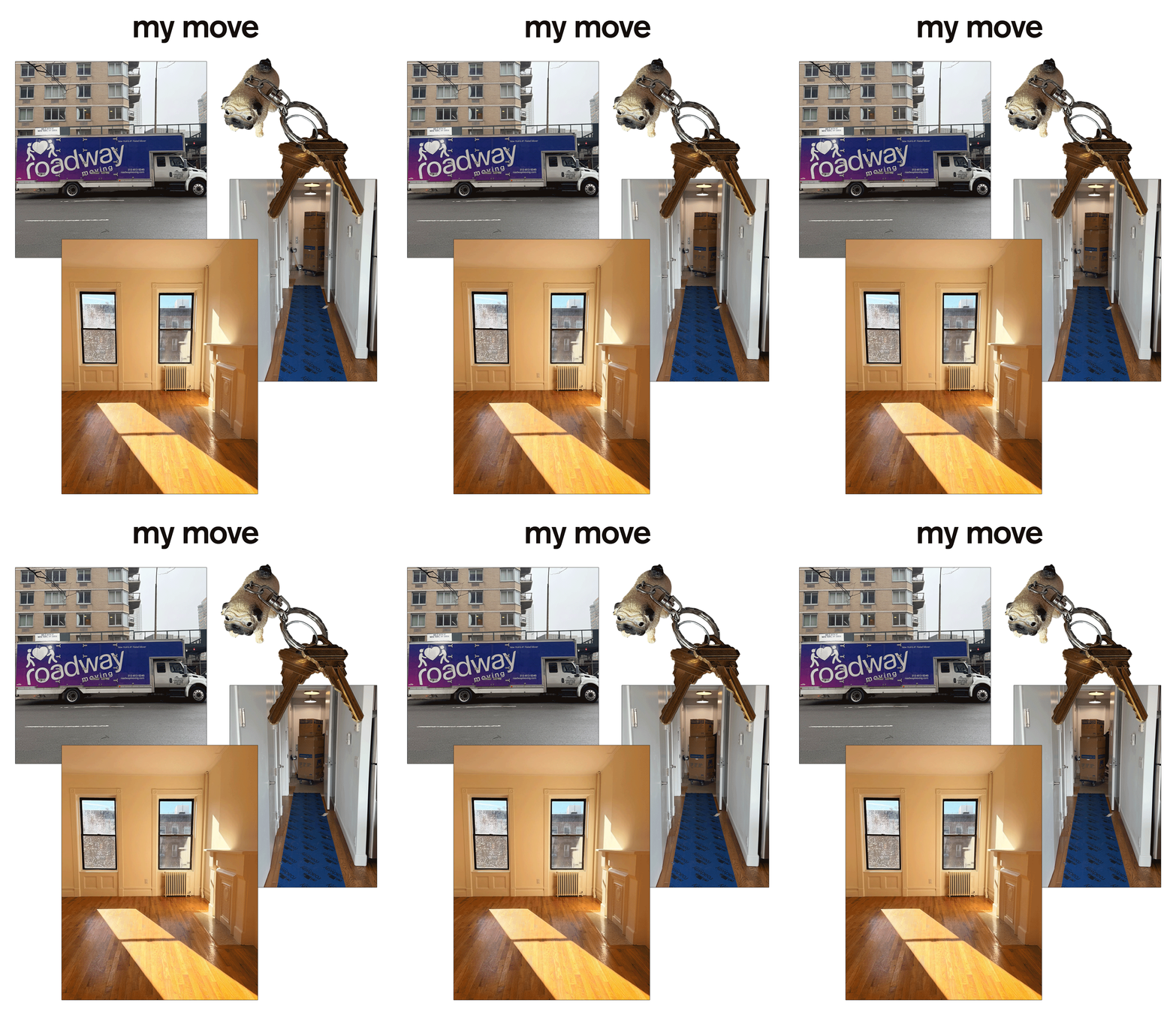
How to Pack Your Wardrobe for a Move
Bright and early on moving day, I didn't touch a single hanger, and that alone felt revolutionary. Instead of ripping clothes off rods and stuffing them into bags (my previous method, regrettably), the Roadway Moving team approached my closet with a level of precision I didn't even realize was possible.
They started with a quick assessment: what was hanging, what was folded, what needed extra care. Then came wardrobe boxes, the unsung hero of the entire process. My clothes stayed on their hangers and were transferred directly into boxes with built-in rods, preserving not just the garments themselves but also the way I had them organized.
Sweaters and denim were folded and packed neatly with paper cushioning. Shoes were paired and wrapped. Handbags were stuffed to maintain their shape and placed carefully into structured boxes. Nothing was crammed, nothing was random, and most importantly, nothing felt like it would be a nightmare to unpack later.
It was fast too. What would have taken me an entire weekend (and several outfit-change breaks) was done in a fraction of the time, with everything labeled and logically grouped.

Rule #1: Only Keep What You Love, Even If It's Hard
Editing your closet before a move sounds obvious. It's also the step most people skip or rush through, and it makes everything harder.
The most useful framework I tried was brutally simple: Have I worn this recently? Do I actually value it? Would I replace it if I lost it? If the answer was no across the board, it didn't come with me.
According to Ross Sapir, founder and CEO of Roadway Moving, that kind of editing isn't just helpful. It's transformative. "Clients who take the time to declutter … have a dramatically smoother experience. It reduces packing time, lowers overall cost, and makes the new space feel intentional from day one," he explained to me over email.
Thinking in categories helped even more. Instead of agonizing over individual pieces, I zoomed out. What do I actually wear day-to-day? What's seasonal? What's just taking up space? As Sapir put it, "The key mindset shift is this: You're not deciding what to get rid of. You're deciding what's worth the time and cost to move." For me, it meant getting rid of dozens of old, bulky college T-shirts; neon puffer jackets I never wore; leggings with holes in them, and five pairs of shoes that looked suspiciously similar. Out with the old, in with the new, as they say.
Rule #2: Skip the Black Trash Bags
There is a very specific kind of chaos that comes from packing a closet into trash bags. Transparently, I know this because I did it one too many times while moving throughout my college years! Throwing everything into a garbage-bag abyss might feel more efficient in the moment, but it becomes deeply inconvenient once it comes time to unpack.
"The biggest mistake people make … is trying to do it themselves with the wrong materials, especially taking clothes off hangers and stuffing everything into bags or boxes," said Sapir. The biggest issue is losing your system, not just wrinkles. Once everything is off hangers and mixed together, you're essentially starting from zero when you unpack.
Keeping clothes on hangers and using proper wardrobe boxes preserves order. You can move your closet section by section—blazers with blazers, dresses with dresses—and re-create it almost instantly on the other side. As Sapir noted, "Wardrobe boxes are absolutely worth it. The value isn't just convenience. It's time saved, protection, and keeping your closet intact." By dividing my closet into its own sections and placing pieces in dedicated wardrobe boxes, I was able to plop everything into its rightful place within minutes of arriving to my new apartment, simultaneously unpacking and organizing my wardrobe.
Rule #3: Don't Neglect Accessories and Shoe Storage
If clothing is the main character, accessories are the supporting cast that can easily get overlooked and damaged. Besides my eye-watering number of clothing items I lugged over from Manhattan to Brooklyn, I've amassed a hefty collection of handbags and designer shoes. Naturally, they were some of my biggest priorities to ensure they weren't damaged in transit. This is even more important if you're moving cross-country, like our editor Eliza is.
According to Sapir, it's best to stuff handbags and shoes with packing paper to ensure they don't lose their shape or get damaged by being tossed around in a moving box. Chucking them into a bin is also a big no-no in Roadway Moving's book. "Heels should never be thrown loose into a carton, as stacking or shifting can easily damage straps, heels, or embellishments," Sapir advised.
Jewelry is its own category entirely. Sapir recommends keeping everything in a dedicated case or organizing system: "Separation is everything. … Pieces shouldn't tangle or scratch, and in many cases, clients choose to transport these items personally for added peace of mind."
Rule #4: Prioritize Storage Over Aesthetics
This one surprised me the most. As someone who cares deeply about how a closet looks, I assumed I'd want everything packed in a visually pleasing way. In reality, function matters more—at least during the move.
"Items that hold their shape and are prone to wrinkling … should stay on hangers," says Sapir, pointing to dresses, blazers, and delicate fabrics. "More durable, flexible items like jeans, T-shirts, and sweaters are better folded. … They stack efficiently, which saves space and time."
A mix of both is practical and necessary. The goal isn't to make everything look perfect in a box. It's to make sure everything arrives in wearable condition.
For high-value pieces, the standard gets even higher. "The overarching rule is [to] give high-value items space and the right materials," Sapir added, nodding to the fact that some clients will transport ready-to-wear runway pieces in garment bags by hand the morning of the move instead of placing them in the back of a truck. "A little extra care during packing saves a lot of risk and cost on the other side."
Shop the Best Moving Essentials


